Asia/Kolkata
BlogApril 24, 2026

How to Actually Track Your Bible Reading (Without Losing Momentum)

Sumit Vairagar
How to Actually Track Your Bible Reading (Without Losing Momentum)
You've been here before. January 1st, fresh reading plan, Genesis chapter one. By February, you're somewhere in Leviticus wondering what happened to your motivation. By March, the plan is abandoned and guilt has replaced enthusiasm. You're not alone. Studies suggest that most Bible reading plans are abandoned within the first few weeks. The problem isn't discipline — it's friction. Paper bookmarks get lost. Spreadsheets feel like homework. And most Bible apps bury the tracking feature under layers of social feeds and notifications. So how do you actually track your Bible reading in a way that sticks? The typical approach to Bible reading tracking falls into three categories, and each has a fatal flaw:
  • Paper bookmarks and journals — Great for the first week. Then you forget to bring them, lose your place, or feel guilty about the blank pages staring back at you.
  • Spreadsheets — Effective if you enjoy data entry. Most people don't.
  • Complex Bible apps — YouVersion and similar apps are powerful, but they're designed around reading plans, not flexible tracking. Miss a day and the plan moves on without you, which feels like failure.
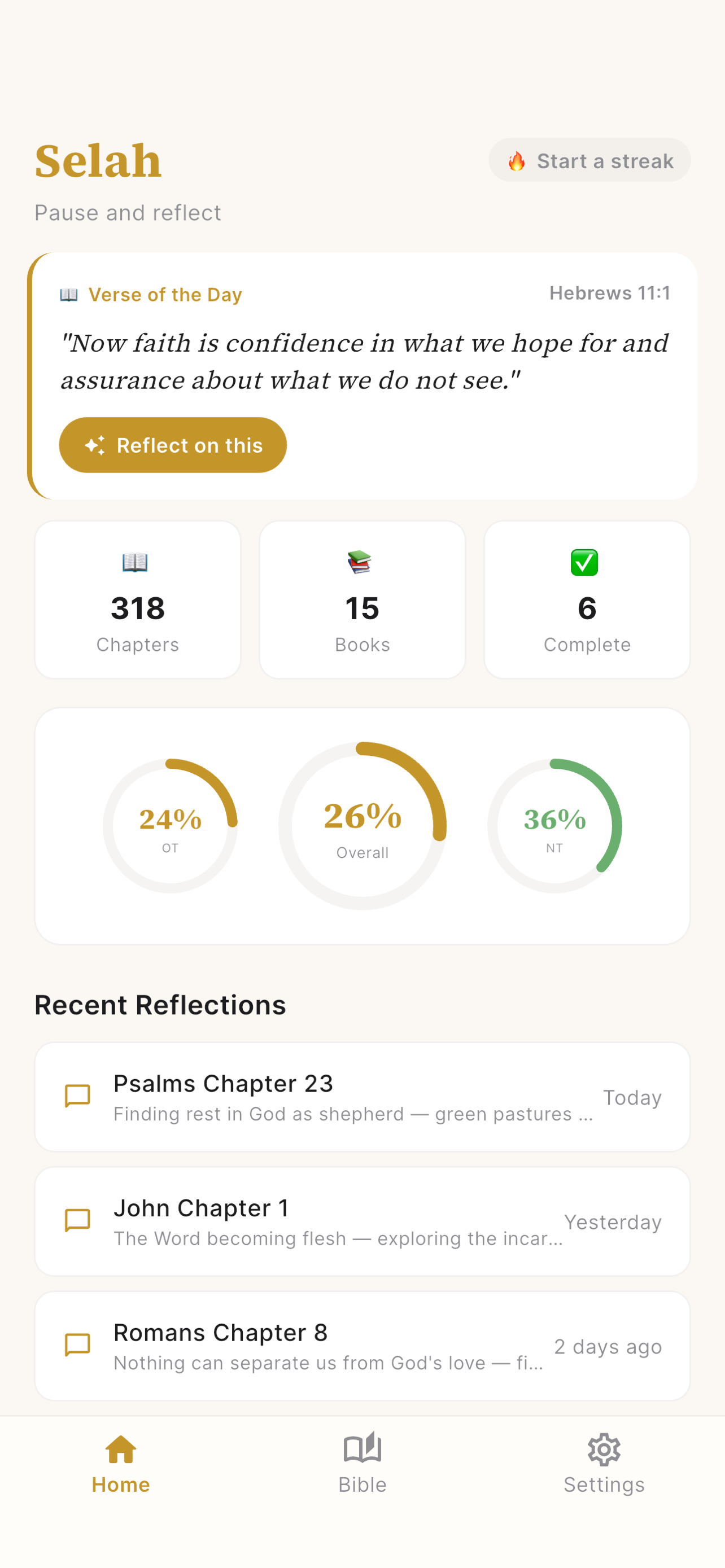
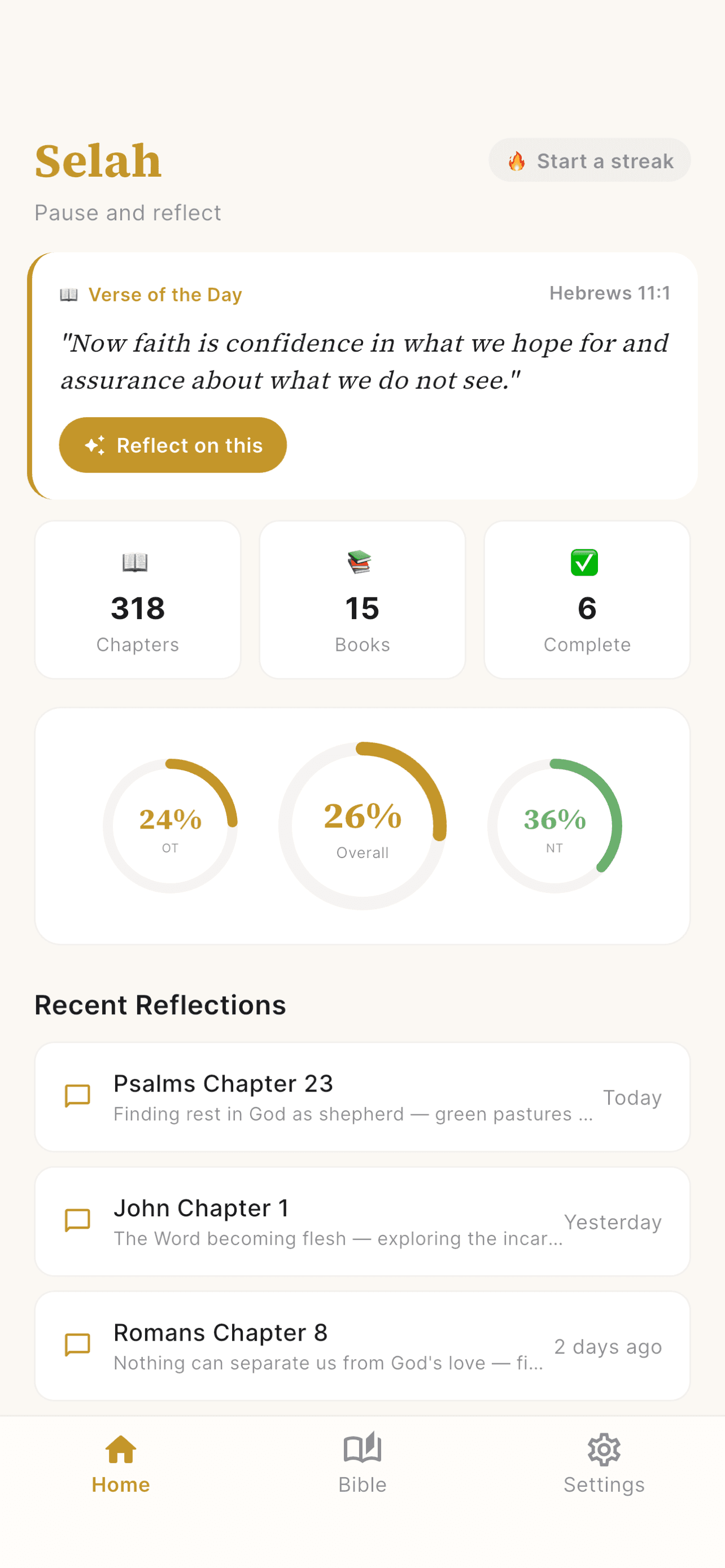
The core issue is that these tools add friction instead of removing it. A good Bible reading tracker should do one thing well: show you where you are and what's next, without making you feel bad about where you aren't. After years of starting and stopping reading plans, here's what I've found actually builds consistency: Reading plans are rigid. Life isn't. Instead of committing to "read the Bible in a year," try tracking which chapters you've actually read across all 66 books. This way, you can read Psalms on a hard day, dive into Romans when you want theology, or work through a Gospel when you need narrative — and it all counts. There's a reason fitness apps show you streaks and progress bars. Visual progress is motivating. When you can see that you've read 40 out of 50 chapters in Genesis, finishing becomes compelling. When you can see your overall Old Testament and New Testament progress side by side, patterns emerge.
Selah home screen showing Bible reading progress
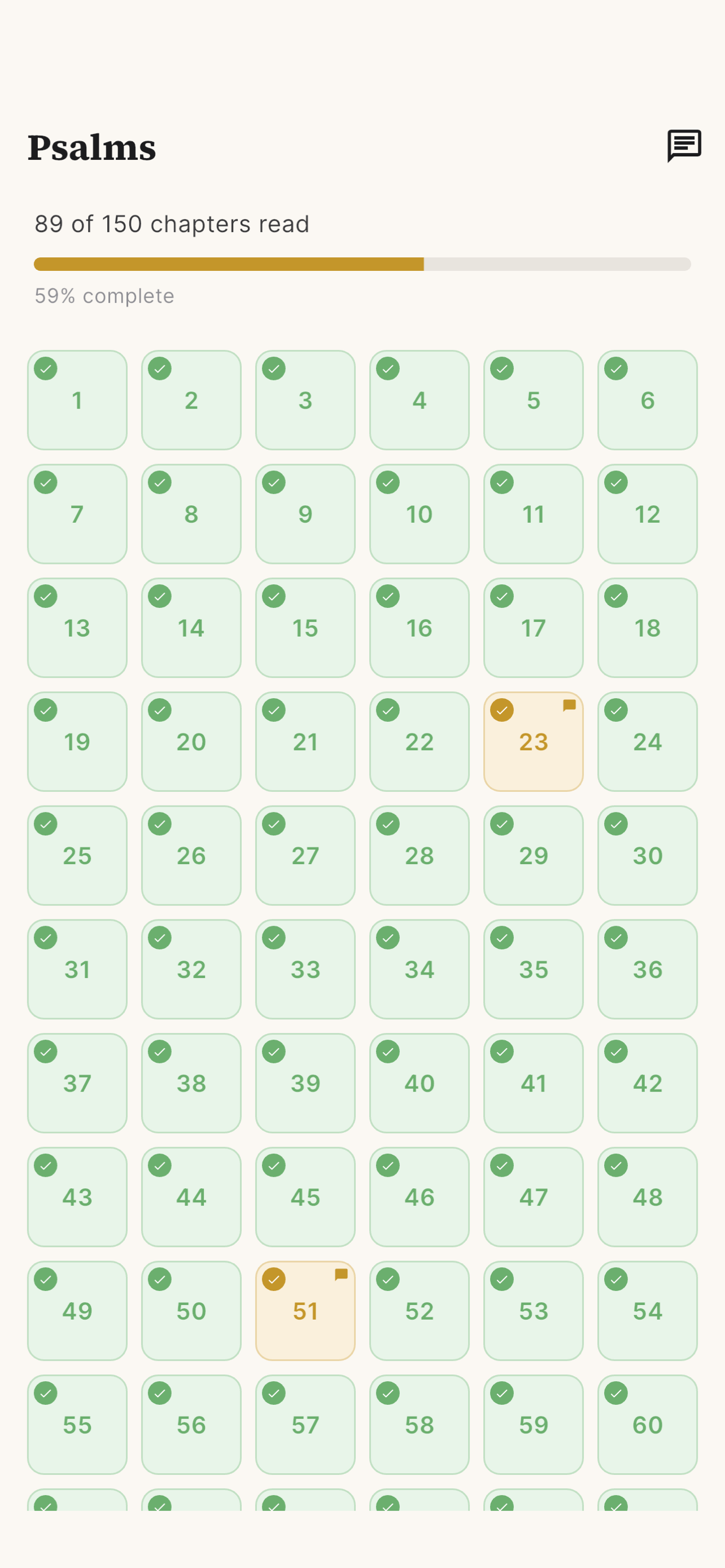
Reading a chapter and actually engaging with it are different things. The best tracking approach distinguishes between chapters you've read and chapters you've reflected on. This creates a natural two-pass system: first read, then go deeper. The tracker should be on the device you always have — your phone. It should open fast, show your progress immediately, and let you mark a chapter as read in one tap. No login walls. No onboarding tutorials. No social features demanding your attention. This is exactly why I built Selah. It's a Bible reading tracker app designed around the principles above: A clean chapter grid for every book. Tap a book, see every chapter laid out in a grid. Grey means unread, colored means read, and a different indicator shows chapters you've reflected on. You always know exactly where you are.
Book detail screen showing chapter grid
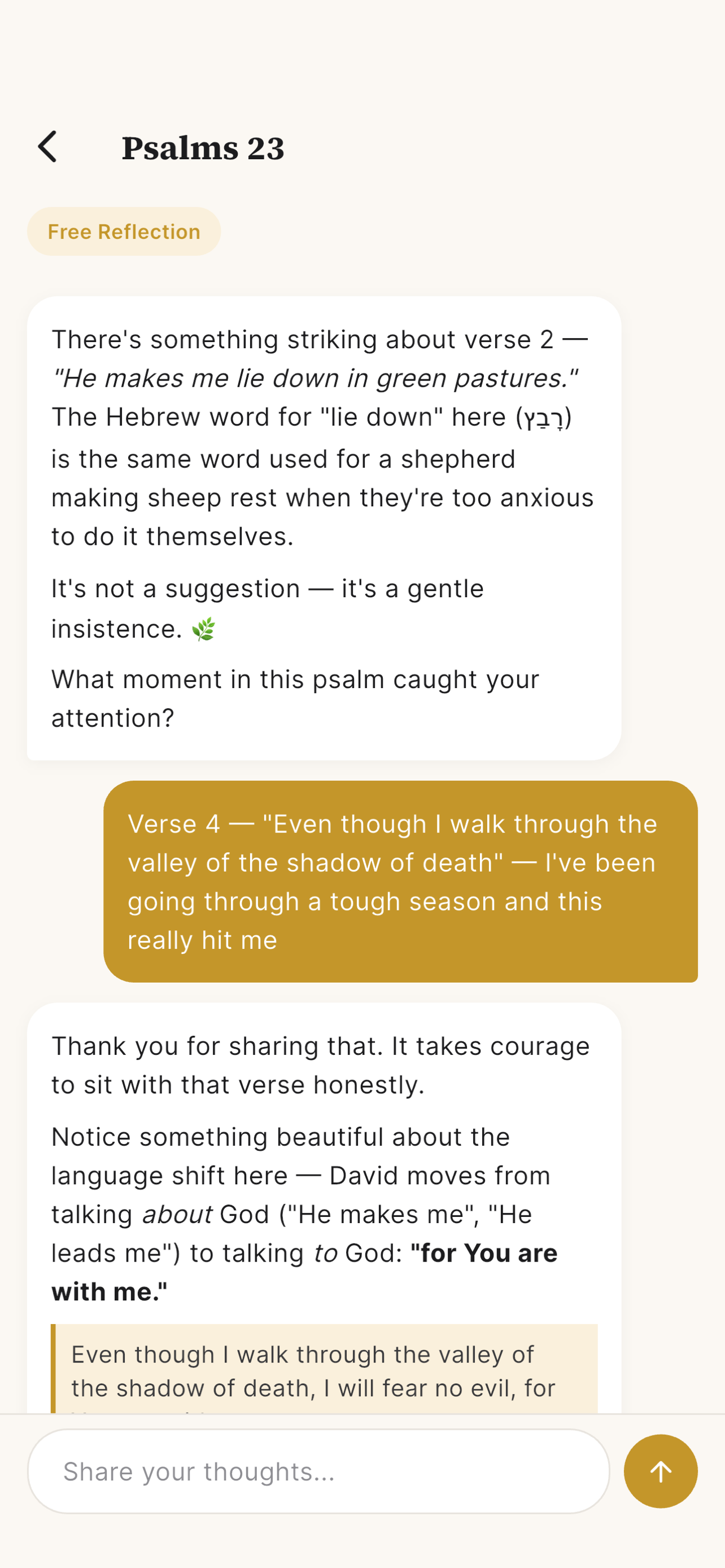
Progress at a glance. The home screen shows your reading progress across the Old and New Testaments with simple visual indicators. No clutter, no social feeds — just your progress. AI-powered reflection. After reading a chapter, you can start a conversation with an AI companion that actually knows the passage. It shares insights from the original languages, historical context, and cross-references. Choose from Free Reflection, the SOAP method, or Lectio Divina.
AI reflection conversation about a Bible chapter
A reader profile that grows with you. Selah builds a profile from your reflections — your strengths, the themes you're drawn to, and your growing edges. The AI uses this to personalize every conversation, making each reflection more relevant than the last. Even with the right tool, consistency requires intention. Here's what works:
  • Start with 5 minutes. Read one chapter. Mark it. Done. You can always read more, but the goal is to show up every day.
  • Anchor it to something you already do. Morning coffee. Lunch break. Before bed. Attach Bible reading to an existing habit and it becomes automatic.
  • Don't punish yourself for gaps. Missed a week? Your progress is still there. Pick up where you left off. A good tracker doesn't reset your streak or make you feel behind.
  • Reflect on what you read. Even a two-minute reflection after reading transforms passive reading into active engagement. This is where real growth happens.
Tracking your Bible reading doesn't need to be complicated. You need a tool that shows your progress visually, lets you read flexibly, and removes friction instead of adding it. Skip the rigid plans and complex apps. Find something simple that meets you where you are.
Selah — Bible CompanionTrack your Bible reading and reflect with an AI companion.

Download on the App Store
What's your biggest challenge with consistent Bible reading? I'd love to hear — reach out on LinkedIn.
Share this post: